
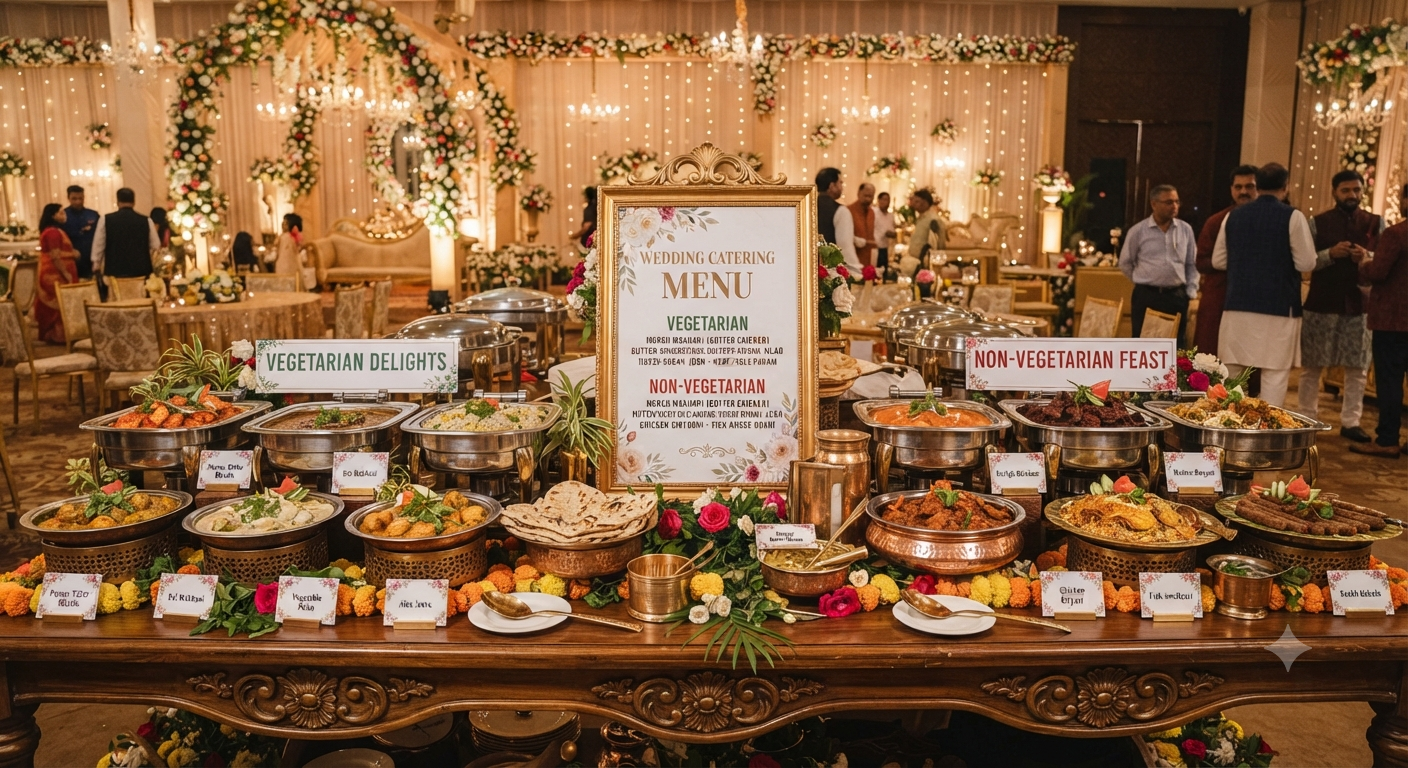
The food is the part of a wedding that guests remember longest. Decorations fade from memory, but a perfectly cooked kosha mangsho, a plate of hot luchi or a bowl of chilled mishti doi stays with people for years. Planning the right wedding catering menu list is therefore one of the most important decisions for any family, and also one of the trickiest. You have to satisfy vegetarians and non-vegetarians, elders and children, traditionalists and adventurous eaters, all within a fixed budget and timeline.
This guide from Rajwada Caterers walks you through every course of a wedding feast, explains how to balance vegetarian and non-vegetarian dishes, and offers detailed sample menus for both Bengali weddings and other wedding celebrations. Whether you are searching for wedding menu ideas for Bengali families or planning a multi-cuisine reception, you will find practical combinations you can use right away.
Why a Balanced Wedding Catering Menu Matters
A wedding guest list is rarely uniform. A single event may include strict vegetarians, people who eat fish but not red meat, guests who avoid onion and garlic, diabetic relatives, and children who want simple food. A balanced menu makes sure that no one leaves hungry or feeling overlooked.
Good wedding food catering is built on a few simple principles:
- Variety across categories: include light and rich dishes, dry and gravy items, sweet and savoury flavours.
- Clear separation of veg and non-veg: separate counters, serving spoons and ideally separate cooking areas, so vegetarian guests are comfortable.
- Flow of the meal: guests should move naturally from drinks to starters, mains and finally dessert, without queues or confusion.
- Seasonal and regional ingredients: fresh, local produce tastes better and keeps costs sensible.
- Enough, but not excessive: too many dishes cause wastage and long queues. Quality always beats quantity.
How to Decide the Veg and Non-Veg Ratio
There is no universal formula, but a useful starting point is to look at your guest profile:
| Guest Profile | Suggested Approach |
| Mostly non-vegetarian (many Bengali and Punjabi families) | 60% non-veg dishes, 40% veg dishes, with at least two strong vegetarian main courses |
| Mixed guest list | Equal number of veg and non-veg main courses, with separate counters |
| Mostly vegetarian (e.g., Marwari, Gujarati families) | Fully vegetarian menu, or a small separate non-veg counter only if requested |
| Large family function with elders | Add light, easily digestible dishes such as dal, plain rice and boiled or lightly cooked vegetables |
As a rule of thumb, always keep the vegetarian options generous even at a non-veg heavy wedding. Vegetarian guests should have a complete meal, not just leftovers from the side dishes.
Course-by-Course Guide to a Wedding Catering Menu List
A well-planned wedding menu follows a logical order. Below is how each course should be thought through.
Welcome Drinks
The welcome drink sets the tone as guests arrive, often tired from travel or the heat. Choose two or three options, including one non-sugary choice.
- Bengali style: Gondhoraj ghol (lime-flavoured spiced buttermilk), aam pora shorbot (raw mango cooler), daber shorbot (tender coconut drink), Bel panna in summer.
- General options: Fresh lime soda, jaljeera, rose sherbet, fruit punch, mint mojito and chilled masala chaas.
- Winter options: Hot tomato soup, kesar milk or masala chai.
Practical tip: Serve drinks in small glasses so guests do not fill up before the meal.
Starters and Snacks
Starters keep guests happy during the long waiting time for photographs, rituals and the arrival of the couple. Offer two to three vegetarian starters and two to three non-vegetarian ones, served hot.
- Vegetarian: Paneer tikka, mochar chop (banana blossom croquette), veg cutlet, hara bhara kebab, corn and cheese balls, beguni, crispy baby corn.
- Non-vegetarian: Kolkata-style bhetki fish fry, chicken kabiraji, mutton cutlet, chicken tikka, fish finger, prawn cutlet.
Pairing tip: Always serve starters with kasundi (Bengali mustard sauce), mint chutney and onion rings or a simple salad on the side.
Vegetarian Main Dishes
Vegetarian dishes are no longer an afterthought. In fact, many guests, including non-vegetarians, make a beeline for well-made vegetarian specialities.
A good selection includes:
- One paneer dish: Paneer butter masala, kadai paneer or shahi paneer.
- One dry vegetable: Aloo posto, jeera aloo, gobi masala or bhindi fry.
- One mixed vegetable or traditional dish: Shukto, mixed vegetable curry or dhokar dalna.
- One dal: Cholar dal (Bengali style), dal tadka or dal makhani.
Non-Vegetarian Main Dishes
The non veg wedding menu is usually the highlight. To keep things balanced, offer one dish from each category: fish, chicken, mutton and, for special celebrations, prawn.
- Fish: Shorshe ilish (hilsa in mustard sauce, seasonal), bhetki paturi, fish kalia, macher jhol.
- Chicken: Kosha murgi (slow-cooked Bengali chicken), chicken rezala, butter chicken, chicken chaap.
- Mutton: Kosha mangsho, mutton rogan josh, mutton dak bungalow.
- Prawn: Chingri malai curry, prawn masala.
Practical tip: Do not offer more than four non-vegetarian mains. Guests rarely taste more than that, and every additional dish adds cost and kitchen complexity.
Rice, Biryani and Pulao
Rice is the backbone of a Bengali feast and an important part of most Indian wedding meals.
- Plain and fragrant rice: Steamed Gobindobhog rice, basanti pulao, ghee rice, jeera rice.
- Biryani: Kolkata chicken or mutton biryani with potato and egg, or a vegetable biryani with raita.
Offer at least one plain option and one flavoured option, so guests can match rice with their preferred curry.
Breads
- Bengali: Luchi (fluffy deep-fried bread), radhaballavi (stuffed with spiced dal), koraishutir kochuri (stuffed with green peas).
- North Indian: Butter naan, tandoori roti, laccha paratha, missi roti, stuffed kulcha.
Breads taste best fresh, so a live counter or tandoor station is worth considering.
Chutneys, Papad and Salads
These small items complete the plate and cleanse the palate between rich dishes.
- Chutneys: Tomato-khejur (date) chutney, aamsotto (dried mango) chutney, pineapple chutney, mint-coriander chutney, tamarind chutney.
- Papad: Fried or roasted papad and crisp papor bhaja.
- Salads: Green salad with cucumber, tomato, carrot and onion, kachumber salad, sprouts salad, boondi raita or fresh curd.
Sweets and Desserts
No wedding menu is complete without a sweet ending. Bengali weddings, in particular, are famous for their mishti.
- Bengali sweets: Rasgulla, sandesh, pantua, rosomalai, mishti doi, jilapi with rabri, nolen gur payesh in winter.
- Other desserts: Gulab jamun, gajar ka halwa, moong dal halwa, ice cream, kulfi, phirni, fruit custard.
- Finishing touches: Paan, saunf (fennel) and sugar candy for digestion.
Practical tip: Offer at least one dessert that is lower in sugar or milk-free for guests with dietary restrictions, such as a fresh fruit platter.
Bengali Wedding Menu Ideas: Sample Menu Combinations
A traditional Bengali food menu in marriage ceremony celebrates fish, rice, fresh vegetables and mishti. Fish is considered auspicious, and the meal follows a gentle progression from bitter to savoury to sweet. Here are sample combinations popular in Kolkata wedding catering.
Sample 1: Classic Bengali Wedding Feast (Non-Vegetarian)
| Course | Dishes |
| Welcome Drink | Gondhoraj ghol, aam pora shorbot |
| Starters | Bhetki fish fry with kasundi, chicken kabiraji, mochar chop |
| Rice and Breads | Basanti pulao, steamed Gobindobhog rice, luchi |
| Vegetarian Dishes | Shukto, aloo posto, cholar dal, begun bhaja |
| Fish | Shorshe ilish or bhetki paturi, macher kalia |
| Chicken | Kosha murgi |
| Mutton | Kosha mangsho |
| Prawn | Chingri malai curry |
| Chutney and Papad | Tomato-khejur chutney, aamsotto, papor bhaja |
| Salad | Green salad with lemon |
| Sweets and Desserts | Mishti doi, rasgulla, sandesh, pantua, paan |
Best for: Traditional families who want an authentic, complete Bengali experience.
Sample 2: Bengali Vegetarian Wedding Menu
| Course | Dishes |
| Welcome Drink | Daber shorbot, bel panna |
| Starters | Mochar chop, veg cutlet, paneer pakoda, beguni |
| Rice and Breads | Basanti pulao, plain rice, luchi, radhaballavi |
| Vegetarian Dishes | Dhokar dalna, shukto, aloo posto, paneer kofta or paneer butter masala, cholar dal |
| Chutney and Papad | Tomato chutney, papad |
| Salad | Cucumber, tomato and carrot salad, boondi raita |
| Sweets and Desserts | Rasgulla, rosomalai, mishti doi, jilapi, payesh |
Best for: Vaishnav families, religious ceremonies or guests who prefer a sattvic style meal.
Sample 3: Modern Bengali Reception Menu (Mixed)
| Course | Veg Options | Non-Veg Options |
| Starters | Paneer tikka, corn cheese balls | Fish finger, chicken tikka, mutton cutlet |
| Rice | Veg pulao, steamed rice | Kolkata chicken biryani |
| Breads | Luchi, butter naan | Luchi, butter naan |
| Main Course | Paneer lababdar, mixed vegetable, dal tadka | Bhetki paturi, chicken rezala, kosha mangsho |
| Accompaniments | Salad, raita, chutney, papad | Salad, raita, chutney, papad |
| Desserts | Mishti doi, gulab jamun, ice cream | Mishti doi, gulab jamun, ice cream |
Best for: Receptions with a large and mixed guest list, where both traditional and contemporary tastes must be served.
Sample 4: Winter Bengali Wedding Special
| Course | Dishes |
| Welcome Drink | Hot tomato soup, masala chai |
| Starters | Fish fry, chicken pakora, cauliflower koraishutir kochuri |
| Rice and Breads | Fulkopir pulao, luchi |
| Mains | Nolen gur-laced chutney, bhapa ilish, mutton kosha, aloo-phulkopi, cholar dal |
| Desserts | Nolen gur payesh, patishapta, sandesh, mishti doi |
Best for: December to February weddings, when seasonal date palm jaggery (nolen gur) and fresh winter vegetables are at their best.
Sample Menus for Other Wedding Celebrations
Not every wedding follows Bengali customs. Rajwada Caterers also plans menus for North Indian, Marwari, Gujarati and multi-cuisine events. Here are tried and tested combinations.
North Indian Wedding Menu (Veg and Non-Veg)
| Course | Vegetarian | Non-Vegetarian |
| Welcome Drink | Jaljeera, rose sherbet | Jaljeera, rose sherbet |
| Starters | Paneer tikka, hara bhara kebab, crispy corn | Chicken tikka, tandoori fish tikka, seekh kebab |
| Main Course | Paneer butter masala, dal makhani, mixed vegetable, aloo gobi | Butter chicken, mutton rogan josh, fish curry |
| Rice | Jeera rice, vegetable biryani | Chicken or mutton biryani |
| Breads | Butter naan, tandoori roti, laccha paratha | Butter naan, tandoori roti, laccha paratha |
| Accompaniments | Boondi raita, green salad, pickle, papad | Mint raita, onion salad, pickle, papad |
| Desserts | Gulab jamun, gajar halwa, kulfi, ice cream | Gulab jamun, gajar halwa, kulfi, ice cream |
Pure Vegetarian Wedding Menu (Marwari and Gujarati Style)
| Course | Dishes |
| Welcome Drink | Masala chaas, fresh lime soda, thandai |
| Starters | Dahi kebab, dhokla, kachori, paneer tikka |
| Main Course | Dal baati churma, gatte ki sabzi, paneer lababdar, ker sangri, mixed vegetable, panchmel dal |
| Rice and Breads | Jeera rice, vegetable pulao, puri, phulka, bajra roti |
| Accompaniments | Kadhi, raita, chutneys, papad, salad |
| Desserts | Moong dal halwa, jalebi with rabri, ghevar, ice cream |
Multi-Cuisine Reception Menu
For a grand reception with a varied crowd, a buffet with live counters works beautifully.
| Counter | Sample Dishes |
| Welcome Drinks | Mocktails, fresh juices, mint mojito |
| Chaat Counter | Pani puri, dahi puchka, papdi chaat |
| Indian Counter | Paneer tikka masala, dal makhani, butter chicken, mutton curry |
| Bengali Counter | Bhetki paturi, kosha mangsho, luchi, aloo posto |
| Chinese Counter | Veg and chicken hakka noodles, Manchurian, chilli paneer, chilli chicken |
| Rice Counter | Biryani, jeera rice, fried rice |
| Live Station | Tandoori breads, pasta or dosa |
| Dessert Counter | Rasgulla, gulab jamun, brownies, ice cream, fruit tart, paan |
Practical Planning Tips from Rajwada Caterers
Following a few simple rules can make a big difference to how your wedding catering unfolds.
- Finalise the guest count early. Include a buffer of 5 to 10 per cent for last-minute arrivals.
- Plan for dietary needs. Ask your guests in advance about allergies, Jain meals, diabetic-friendly options or no onion-garlic requirements.
- Consider the season. Heavy fried and creamy dishes suit winter. In summer, choose lighter food and plenty of cold drinks.
- Choose the right service style. Buffets suit large crowds, while plated or table service gives a more formal, personal feel for smaller functions.
- Hold a tasting session. Always taste the main dishes before finalising, so there are no surprises on the day.
- Plan the counters properly. Place desserts, drinks and the main buffet in different spots to avoid congestion.
- Keep a children’s section. Simple items such as noodles, mini pizzas, fries and ice cream keep younger guests happy.
- Think about timing. Starters should reach guests early, mains should open once the main ceremony is under way, and desserts should be available till the end.
Example: Planning for 300 Guests
Imagine a Kolkata wedding with 300 guests, of whom about 70 per cent eat non-veg. A balanced menu could include:
- 2 welcome drinks
- 3 vegetarian starters and 3 non-vegetarian starters
- 4 vegetarian main dishes (including one paneer item and one dal)
- 3 non-vegetarian main dishes (one fish, one chicken, one mutton)
- 2 rice varieties and 2 breads
- 3 chutneys and accompaniments with papad and salad
- 4 sweets and desserts
This keeps the spread generous while staying manageable for the kitchen and the serving team.
Why Choose Rajwada Caterers for Your Wedding Food Catering
Rajwada Caterers specialises in end-to-end wedding food catering, from menu planning and live counters to trained serving staff and clean-up. Our team understands Bengali traditions as well as North Indian, Marwari and multi-cuisine celebrations, and we customise every menu to your guest list, budget and venue. If you are looking for dependable Kolkata wedding catering, we will help you design a menu that feels personal and tastes memorable.
Frequently Asked Questions
For a normal wedding of 200 to 400 people, a menu comprising of 2 welcome drinks, 5 to 6 starters, 7 to 9 main dishes, 2 rice items, 2 to 3 breads, 3 accompaniments and 4 to 5 desserts is generally comfortable. More dishes is not better meal, well prepared food in right quantity is most important.
Have separate serving utensils, cooking areas (if possible) and counters. Make sure that you label everything clearly and that the vegetarian guests have a complete choice of starters, mains, breads, rice and dessert.
The ideal non-vegetarian menu would comprise of a fish (bhetki paturi), a chicken (kosha murgi), a mutton (kosha mangsho) and a prawn (chingri malai curry) with shukto and aloo posto as vegetarian dishes, rice or luchi, chutney and mishti.
If you are getting married during the peak months of November through February, it is suggested that you book your caterer two to three months in advance. There is plenty of time for tastings of the menu, changing the numbers of guests and special requests.
Yes A professional caterer can make Jain food, food without onions and garlic, desserts with less sugar, gluten-friendly food and food for children. Notify your guests of their requirements well in advance of the event.
Buffets are good for large guest lists and mixed menus. For smaller, formal gatherings and traditional Bengali bhoj, a sit-down or plated service is appropriate, where food is served in courses. Many families choose a combination of the two, a buffet for the reception and a sit-down meal for the ceremony, for example.
Conclusion
A great wedding catering menu list is about balance. It’s a thoughtful mix of vegetarian and non-vegetarian dishes, a smooth flow from welcome drink to dessert, and a menu that respects your family’s traditions and your guests’ tastes. A little planning is all you need to make the day stress-free and the food memorable, whether it is a traditional Bengali spread of shorshe ilish and mishti doi, a grand North Indian feast or a modern multi-cuisine spread.
Ready to choose your wedding menu? Contact Rajwada Caterers for a personalised menu consultation and tasting session. Let us take care of the food and enjoy every minute of your celebration.