
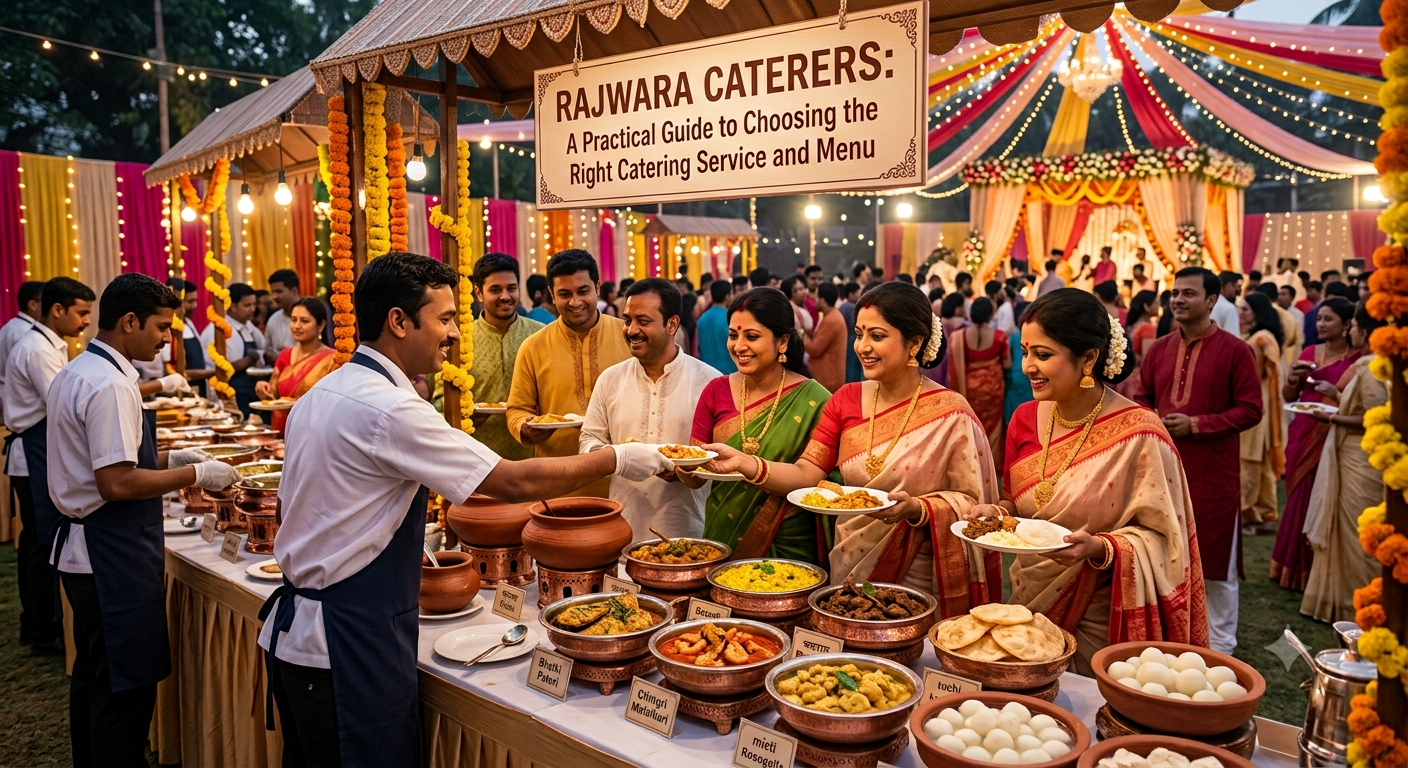
Food is the most memorable part in any event. Even the most beautifully decorated venue can feel like a letdown if the food is late, runs out too soon, or does not meet guests’ expectations. This is why picking from the many caterers in Kolkata is as important as the venue or the guest list.
This guide takes you through how to shortlist, compare and book a catering company, and how to create a menu that works for your guests, your venue and your budget.
The Importance of the Right Caterer for the Total Event Experience
A caterer is much more than a cook. The right team will set the tone of the event, the comfort level of the guests and the stress level of the host on the day.
Imagine a wedding reception for 300 guests. People notice straight away if the buffet is long, if the starters come after the main course, if the staff don’t know who is serving what. The same menu is handled with ease by a well-oiled team.
Good catering influences
Guest comfort: quick service, sufficient amounts and easy access to food
Event flow food service integrated with speeches, rituals, performances or meetings.
Host peace of mind Less last minute problems to solve
Overall impression: especially for weddings and corporate functions where hospitality is a reflection on the host
What Professional Catering Companies Can Offer
Many people think of catering services as cooked food served at a venue. Experienced professional caterers often do much more. This may include (depending on company and package).
Menu planning and tailoring
- Captains and supervisors, service personnel
- Glassware, silverware and dishes
- Buffet counters, chafing dishes and live station setups
- Table setting and serving food
- Welcome Drinks Mocktails and Dessert Counters
- On-site cooking or finishing
- Post Service Clean Up
Ask what’s covered by the quote and what isn’t. Two quotes can look very similar on paper but have very different scopes of work.
How to Select Caterers
Know what you want before you call anyone. A clear brief helps caterers quote accurately. It also helps you compare apples to apples.
Type of Event
A wedding is different from a birthday party, a corporate lunch is different from a puja gathering. Wedding catering services typically involve multiple functions, large numbers of guests, and elaborate menus. In the industry of corporate catering it’s usually about being on time, easy service and reliable quality. The party catering services can be based on variety, snacks and live counters.
Guest Number
Some caterers are fine with small gatherings of 30-50 people, while others specialize in events of 500 or more. Pick a company with experience that matches your scale.
Settings
Ask whether the venue has a kitchen, whether outside caterers are allowed, what the power and water situation is and how far the food will have to travel. Some venues have a list of approved caterers, or rules that will impact your choice.
Service Needs & Menu
Decide roughly what kind of food you want, how many courses and how you want to be served. Share Quote Requests
Budget
Define a realistic range early. “Having a good conversation about the budget allows a caterer to offer up options that make sense rather than just a package that doesn’t fit.”
How to Compare Catering Companies Beyond the Per-Person Price
The per-plate rate is the easiest number to compare, and most often the most misleading. A lower rate may exclude staff, equipment or some dishes. A higher rate might cover services that would be additional elsewhere.
Compare these points to each other
- Number of included dishes and categories
- Amount per guest, and whether seconds are permitted
- Guest to staff ratio
- Crockery & equipment provided
- Live counters and their manning
- Transport, setup and cleanup fees
- Final guest count change policy
Terms of cancelation and payment schedule
Ask for written, itemized estimates. If a quote is vague, ask for details before you compare.
What Drives Up Catering Prices
You can make informed trade-offs instead of simply accepting or rejecting a quote by understanding cost drivers.
- More dishes, premium items and elaborate preparations increase costs Menu choice
- Sea food, mutton, dry fruits and seasonal or imported items are costly
- Guest count : bigger numbers can reduce per-person cost, but add complexity
- Service style: plated service and live counters typically require more staff and equipment than a standard buffet
- Staffing: More guests, more courses, longer events = more service staff
- Event needs Pricing will vary based on distance, timing, multiple locations and special set ups
If budget is a concern, it is often more successful to cut back on dishes and maintain quality than to present a long menu with lower quality ingredients.
How to Prepare a Sensible and Balanced Menu
Long menus don’t make for good menus. It strikes a balance between flavor, texture, dietary restrictions, and is manageable for the kitchen and the service team.
A balanced event menu will typically include:
- Refreshing choices (one or two welcome drinks)
- Starters: A selection of vegetarian and non-vegetarian starters
- Main course: one or two gravies, a dry dish, rice or biryani, breads, dal and a vegetable
- Accompaniments salad, raita, papad, chutney, pickles
- Desserts: one traditional, one modern
A practical example: for a family function of 150 guests, a menu with two starters, four main course dishes, one rice item, breads and two desserts does a better job for guests than fifteen mains that get a spoonful each. A smaller menu, executed well and restocked in a timely fashion, makes a better impression.
Selecting a Service Format
The right format depends on your venue, the number of guests and the sort of atmosphere you want to create.
Catering Buffet
Buffet catering is the most popular type of catering for weddings and large events. It’s varied, it allows guests to pick what and how much to eat, and it’s good for large crowds. Success depends on multiple serving points to avoid queues and staff to replenish dishes quickly.
Plated Dinners
Plating is formal and appropriate for small dinners, business parties and seated events. It needs more staff and precise timing and it limits the ability for guests to choose portions.
Live Counter’s
The live stations like chaat, tandoor, pasta, dosa or dessert counters are interactive and fresh. The best ones are limited to a few popular choices, because each counter has to have its own cook, and build its own line.
Other Versions
- Family-style service. The dishes are served on tables for sharing, which is nice for close groups.
- Packed meals or boxes are handy for corporate seminars, training sessions and outdoor events .
- Hybrid service: buffet for main courses and plated desserts or live counters with standard buffet
Including Regional And Contemporary Dishes, North Indian, Bengali
Guests in Kolkata often love variety and a thoughtful menu can reflect that without being chaotic.
Bengali dishes Classics like fish preparations, kosha mangsho, luchi, chholar dal, and mishti items are perfect for weddings, annaprashan and festive occasions
Typical North Indian food is represented by still paneer dishes, tandoori food, dal makhani, naan and biryani, which are popular with mixed groups.
Regional options: Chinese-style favorites, South Indian items or Rajasthani and Gujarati dishes can cater to specific guest groups
Modern dishes: fusion starters, pasta stations, mocktails and contemporary desserts add a fresh touch, especially for younger guests
A smart way to do this is to base the menu on one or two core cuisines and then incorporate little bits from other cuisines. A Bengali wedding lunch, for instance, could go through the traditional sequence of courses and then include a single live chaat counter to add some variety.
Considering special dietary requirements, Vegetarian, Non-Vegetarian & Children’s
Collect dietary information early, preferably through your invitation or RSVP process.
- Vegetarian and non-vegetarian guests: be sure to keep the two separate when cooking, serving and labeling, particularly at buffets.
- Jain or no-onion-no-garlic needs: separate prep, not just omitted ingredients
- Children: provide simple, familiar items such as noodles, pasta, fries, mild rice dishes or small desserts
- Allergies & health requirements: popular requests include nuts, dairy, gluten and diabetic friendly
- Older guests. Ladylike foods, sit close to the food and drinks.
Does the caterer have a method for accommodating special requirements and labeling dishes clearly?
The Importance of Tasting and Customizing Food
A tasting allows you to evaluate flavor, seasoning, texture and presentation before you commit. It also shows how responsive and flexible the caterer is.”
At a tasting:
- Try the dishes you would most likely choose
- Check consistency of salt, spice and oil levels
- Ask if the sample is representative of what will be served in volume.
- Talk about modifications. Less spice, different sweet options, or switching dishes
Note that policies, availability and charges for tastings vary from company to company, so check ahead of time.
Hygiene, Food Handling, Transport, Presentation and Service Staff
These factors are rarely mentioned, but are the determinants of the success of an event.
- Kitchen and hygiene standards: Inquire about kitchen cleanliness, how ingredients are stored, and hygiene of staff. If possible, visit the kitchen and ask about relevant licensing such as FSSAI registration
- Food handling and temperature: hot food must be kept hot and cold food must be kept cold for reasonable holding times
- Transportation: in Kolkata with traffic food needs to be in proper containers and delivered on time
- Presentation. Clean counters, tidy serving dishes and clear labels are all the caterer’s attention to detail.
- Service staff: Well-trained, well-dressed, courteous staff makes a difference. Ask how many staff are there and who on earth manages them
Questions to Ask Before Booking a Catering Company
Better conversations with a list in hand.
- What is included in the per-person rate and what is an additional charge?
- How many events in a day?
- Do you have photos or references from similar events I can view?
- How many staff will I have for my event?
- Do you supply crockery, counters and decor for food stations?
- How do you feel about changes to the guest count or menu?
- When do you need the final headcount the earliest?
- What are the payment and cancelation policies?
- How do you accommodate special diets?
- And if anything goes wrong on the day? What will happen?
Common Mistakes in Choosing a Caterer & How to Avoid Them
- Choosing only on price: compare scope and inclusions not just the rate
- Menu overreach — too many dishes drain the kitchen and dilute quality
- Taste? Skip that. You lose your best opportunity to check quality
- Ignoring the rules of the venue: check permissions, kitchen access and timing restrictions
- Discuss how late increases or decreases in guest count will be handled
- Not making staffing clear: not enough staff means service slows down and queues get long
- Verbal details . . . get menus, quantities, terms in writing
- Booking too late: Good caterers book up early, especially during wedding season
- Coordination with the Venue, Event Schedule, and Advance Planning
Catering is best when it is coordinated with the rest of the event. Provide your caterer with the entire schedule including when guests arrive, the rituals, performances, speeches and when food service should begin.
Work with the venue to coordinate on
- Access to kitchen and setup time
- Availability of power, water and gas
- Loading and unloading itinerary
- Layout and Authorized Serving Areas
- Timing of waste disposal and cleanup
For medium events, begin conversations several weeks in advance. For weddings and larger functions, begin conversations several months in advance. Ensure you agree the final menu and headcount well in advance of the event and have one point of contact on both sides for the day itself.
Conclusion
A catering company selection is a series of practical decisions. You need to identify your event needs, carefully short list, compare quotes on substance, design a balanced menu and confirm details in writing. But hosts who plan ahead, who taste before they book, who ask intelligent questions, usually avoid most common problems.
Start with your guest count, venue and menu preferences, then use the checklist above to compare your options. A good caterer will allow you to concentrate on the event itself, while your guests enjoy a meal that suits the event.
Frequently asked questions
Q1. How early should I book caterers in Kolkata?
It is advisable to make reservations two to six months ahead of time for weddings and big events, especially in the winter wedding season and holidays. A few weeks may be sufficient for smaller parties or corporate events, but it’s better to do it earlier.
Q2. What is the difference between catering services and a catering company?
The terms are often used interchangeably. Catering services means the work being done like food preparation , service and set-up . The business doing that work is a catering company . The scope varies, so check to see what is included.
Q3. Which is better, buffet or plated catering?
Both are equally good, universally. Buffets are good for large groups of people and they offer a wide selection of foods to choose from. Plated service is formal and is best suited for smaller seated events. Choose what is best for your guest count, venue layout and budget.
Q4. How to determine the number of dishes to include in a menu?
Quality over quantity. For many events, a few starters, a couple of main dishes, rice or biryani, breads and one or two desserts are all that is needed. Your caterer can recommend amounts based on the number of guests and the duration of the event.
Q5. Should I request a food tasting prior to booking?
Yes, where possible. A tasting lets you judge flavor, consistency and presentation and gives you a chance to ask for changes. Check the tasting policy and any charges in advance.
Q6. How do I host guests with dietary restrictions?
Grab the requirements early and share with your caterer. Request separate preparation for vegetarian, Jain or allergy sensitive dishes, clear labeling at counters and suitable options for kids and elderly guests.