
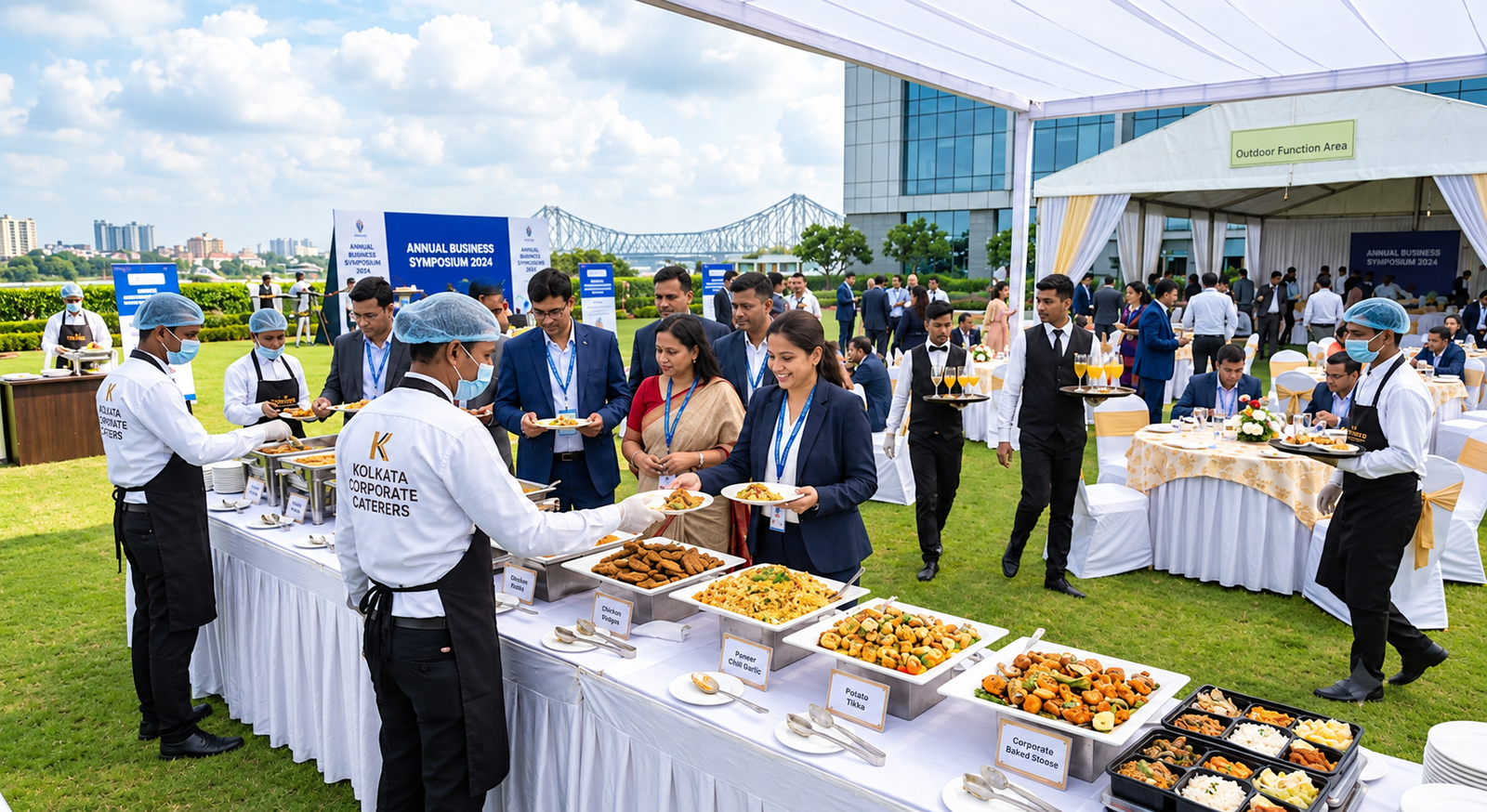
Food is seldom the star of a business event, but it does set the tone for the event. A conference without a lunch break; a product launch with tea served after the speeches; an open-air event with lukewarm food – all of these can leave a lasting impression. These issues are prevented as known corporate caterers look at catering as an operational function and not an afterthought for companies in Kolkata.
In this article, we’re going to explain how corporate catering works, how it’s different from other types of catering, and what companies should think about before selecting a caterer.
Why Catering Is Needed For Corporate Events
People who attend business events go to work, learn or network. Well, good catering can accomplish all these objectives.
- Energy and focus: Meals and refreshments are provided to keep people awake during long sessions.
- Professional impression: How you are received by clients and partners.
- Employee morale: Serving food at internal events demonstrates that the company cares about its people.
- Smooth scheduling : Service windows are predictable so program can stay on schedule.
Wedding/Private Party Catering vs Corporate Catering
Catering for weddings and private parties is usually a matter of celebration, large menus and a relaxed pace. In terms of Corporate Event Catering, it’s all about time, discipline and flexibility.
Service is schedule driven – meals need to fit around sessions, presentations and breaks.
- Mixed Guest Profiles: Guests are a mix of senior executives, clients, vendors and staff who have different dietary requirements.
- Food must be easy to eat standing, networking or taking notes. Simple, clean service:
- More coordination: Corporate Catering Services often have an HR or admin contact that needs to be communicated with effectively and decisions need to be made quickly.
- Budget control. Costs are often compared to approved budgets and per-head limits.
Event Types that May Require Catering Services
Professional caterers can handle a number of different business events including:
- Board meetings and management retreats
- Seminars & Conferences
- Training sessions and induction programs
- Customer demos and product launches
- Annual days, award nites and employee engagement events…
- Office Event Catering & Office Party Festival Celebrations
- Corporate Party Catering Year end or milestone celebrations
- Outdoor team outings, sports days, picnics
- Menu Planning Menu Planning Around: Duration, Guests, Schedule & Venue
What works in a two hour meeting will not work for a whole day conference. Begin with these four questions:
Length of event
Light snacks, tea and coffee may be enough for short meetings. The program is a full day program with breakfast, mid-morning refreshment, lunch and evening refreshment.
Guest profile
Think about age groups, regional preferences, seniority and whether guests are local or traveling. A team outing might demand casual, easy to handle food, whereas senior clients would expect a more formal buffet.
Agenda
Plan meals in line with the agenda. And don’t eat a big meal just before a big presentation. Make sure your breaks are short enough so you don’t run over.
Location info
Office pantry and hotel hall and open lawn, different facilities for space and power, and for kitchen access. The menu has to be realistic for the environment.
Timeliness is important in Service
Being punctual is part of being a business professional. A late lunch is a late afternoon. If you serve tea during a presentation, you lose attention.
Business Event Catering: What You Can Expect
- Advance notice of confirmed service dates
- Setup done, guests are coming
- Staff told when to serve and when to disappear
- Build in buffer time for unexpected changes e.g. a session running over
Planning Meals and Snacks
Different times of the day require different formats.
- Breakfast: Light and easy such as sandwiches, poha, idli, pastries, fruit, juice and hot drinks. Speed is important because guests often eat before the first session.
- Tea & Coffee Breaks – Short and with easy food. Keep beverages warm. Replenish as necessary.
- Lunches on the job: Small, low-mess meals that let the conversation flow. Boxed meals or small plated servings are a good option.
- Buffet meals, ideal for larger groups. Several counters break the queues and keep the break in its time slot.
- Evening refreshments Light snacks with tea, coffee and cool drinks. These are good for networking sessions, end of day get-togethers.
For example, a one day seminar for 150 people could include breakfast on arrival, a tea break at 11.30, a buffet lunch at 1.30 and an evening snack service when the program finishes.
Important Factors in Outdoor Catering Service
Outdoor Catering Services has options such as garden lawns, resorts and open-air venues, but it also adds layers of planning. Here are some things that businesses should consider regarding Outdoor Event Catering:
- Weather: Shade, covered serving areas and contingency plans for rain or heat.
- Space and layout Space for food counters, guest circulation and service staff
- Water and power Water and power for cooking, heating and washing.
- Access: Is the vehicle able to get to the set-up area for delivery?
- Waste management is the gathering and disposal of waste.
- Food Storage, Preparation, Transportation, Serving and Hygiene in the Outdoors
Food safety outdoors deserves more attention than in the kitchen where conditions are controlled.
- Storage: Perishable items require temperature control and covered containers.
- Preparation: Consider what will be cooked in the kitchen and what will be cooked on the spot.
- Transportation: Quality and realistic planning of travel-time. Insulated clean containers are a blessing especially in the heat and humidity of Kolkata.
- Serving Keep food hot. Hold food hot in chafing dishes, covers, and utensils.
- Hygiene: Handwashing facilities, clean uniforms, gloves as appropriate, clear separation of raw and cooked items.
Why You Need to Coordinate With Organizers and Venue Staff
Catering rarely works alone. Caterers have to deal with event managers, venue staff, AV teams and decorators. You should be on the lookout for:
- Venue Access and Set-Up Times
- Loading & Unloading Routes
- Permission to use kitchen or preparation area
- Power & Water provision
- Final agenda and headcount changes
- One Point of Contact on the Day
You avoid confusion last minute and keep things running smoothly in service when things are clear.
Estimating catering quantities
The planning of quantities is a balancing act between waste and shortage. Some practical guiding principles are:
Real attendance is what matters. Get RSVPs and plan for a little cushion (not a big one).
Think event format.” If the reception is standing, more finger food per person is needed than for a sit-down meal.
Duration matters. More refills of beverage; more rounds of snacks; the longer the event.
Think about the time of day . Lunch and dinner times usually have higher consumption than mid-afternoon breaks .
Look at what happened before: Past attendance numbers and eating and drinking habits make your guess better.
A good caterer can advise on per head quantities according to the type of menu and event.
Variety, Dietary Needs, Presentation & Budget – All In Balance
A good menu is not the one which is the longest. It is the one which suits the guest and the purse.
- Variety: Offer a decent selection, not so many that costs and complexity go up.
- Dietary requirements: Have vegetarian options, ask in advance for jain, vegan, gluten free, diabetic friendly or allergy related requirements.
- Presentation: It’s more important to have clean and neat labeling and tidy counters than fancy decoration.
- Budget: Set a per head cap early and focus on quality in the core items rather than spreading the money too thin.
Typical Mistakes to Avoid
- Not booking the caterer soon enough for the event.
- Non disclosure of complete schedule/agenda
- Not thinking about diet preferences until the last minute
- Large groups over estimate how long a service takes
- Ignoring venue limitations like parking or kitchen access
- Just check by Price without checking process and experience… – no firm-side coordinator
Questions to Ask Before Hiring a Caterer
A Catering Company in Kolkata should be able to answer real questions. Try asking:
- What kinds of corporate/outdoor events have you done?
- Could you provide us with a sample menu that would fit our schedule and budget?
- How many service staff will be deployed and how will they be managed?’
- How do you manage food storage, transport and hygiene for outdoor events?
- How do you deal with headcount or timing changes?
- This quote includes dishes, counters, cleanup, etc.
- Who will be the contact person on the day?
If you are a business and looking for professional catering services, these are the questions you may ask to the service providers like Rajwada Caterers who are into corporate and outdoor catering services in Kolkata.
Why experience, planning and food safety and staffing matter
To the guest, corporate catering can seem simple; however, behind the scenes it is a very structured operation.
- Experience: A caterer who knows the corporate calendar knows what to expect.
- Operational planning Create menus, timelines, logistics and contingency plans.
- Food safety: Ensuring proper handling standards protects the guests and the host company’s reputation.
- Staffing: Staff are well trained and briefed, efficient and professional in their service.
- Service Coordination: Open communication with the venue team and event organizers helps all elements to be in sync.
How Professional Catering Enhances Your Experience
Good catering is the kind so well planned it becomes part of the background. Employees get their rightful breaks, clients feel cared for, and organizers can focus on the program instead of chasing after food-related problems. From Office Event Catering for a team celebration to a big outdoor function, the goal is the same: reliable service to match the event.
Conclusion
One aspect of event management that’s worth planning early is catering. Companies in Kolkata can make informed decisions when they understand differences of corporate catering from other models, customize menus to the schedule and guest profile, plan efficiently for outdoor settings and ask the right questions. “Treat the caterer as a partner in the event, give clear information and plan well in advance.
Frequently Asked Questions
Q1. When to hire a caterer for a corporate event?
One to two weeks ahead of time for small events and several weeks ahead of time for large conferences, outdoor functions or during peak festive periods.
Q2. What is the difference between wedding catering and corporate event catering?
Corporate catering is about being on time, being simple and being part of an agenda whereas wedding catering is about celebration, extensive menus and eating for longer periods of time.
Q3. What is Included in an Estimate for Corporate Catering?
Check the menu items, cost per head, staff, service equipment, set up and clean up, transport, taxes and any other additional costs.
Q4. How do we handle dietary requirements?
Collect preferences in advance with RSVPs. Communicate them to the caterer and ensure dishes are clearly labeled at the event.
Q5. What other planning is involved in outdoor catering services?
Coordinate with the venue for weather protection, power and water, vehicle access, food storage, hygiene facilities and waste disposal.
Q6. How do you decide on the amount of food to order?
Calculate based on confirmed attendance, length of the event, format (seated or standing) and time of day. Also factor in the advice of your caterer based on their experience.